


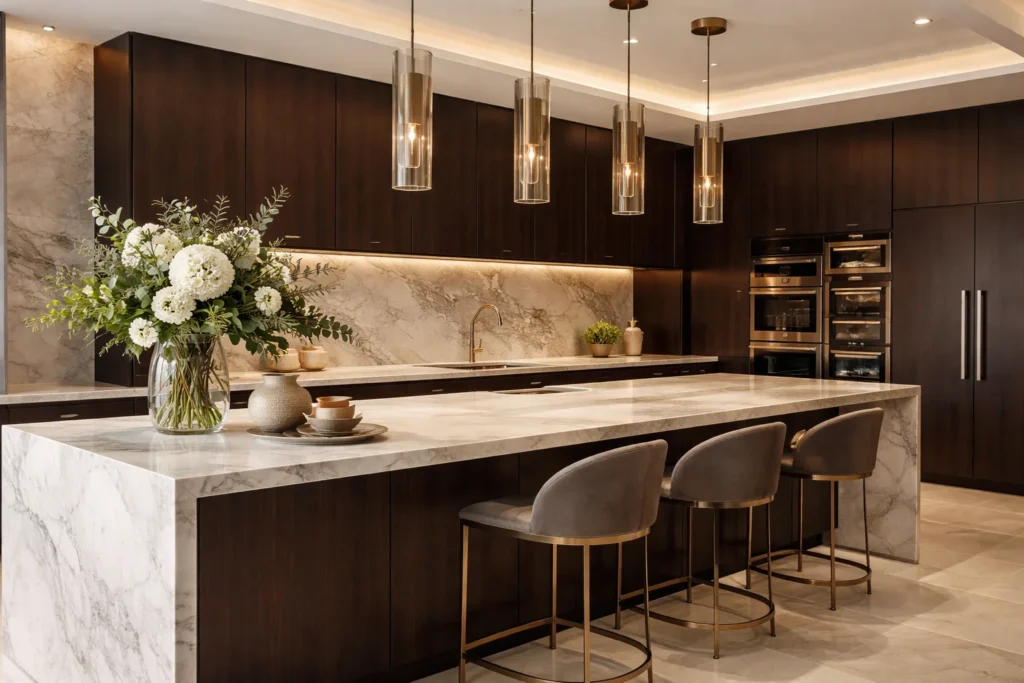
How to Choose a Luxury Kitchen Manufacturer in Dubai. Dubai has no shortage of beautiful kitchens. Walk into any modern apartment in Downtown or a villa in Emirates Hills and you’ll see clean lines, bold islands, statement lighting, and finishes that look straight out of a design magazine. But here’s what most homeowners learn only after they start shopping: a kitchen can look impressive in photos and still feel frustrating in daily life.
Drawers that don’t glide smoothly. Doors that go out of alignment. Edges that chip too easily. Storage that looks “fine” on paper but turns into clutter after a month. And the biggest one: a kitchen that doesn’t fit the space properly because measurements, planning, and execution weren’t treated seriously.
That’s why choosing the right kitchen partner matters so much—especially if you want a premium result. This guide is written to help you choose with confidence. Not with buzzwords, not with vague promises, but with a practical checklist you can actually use.
And yes—if you’re actively comparing options right now, you’ll notice a lot of companies label themselves as suppliers, showrooms, or manufacturers. Each can work, but the right choice depends on what you need, your timeline, and how much customization your space requires.
luxury kitchen manufacturers in Dubai
How to Choose a Luxury Kitchen Manufacturer in Dubai (Quick Checklist)
Luxury kitchens are not one fixed style. In Dubai, “luxury” might mean:
- A minimal, matte kitchen with flawless alignment
- A warm, textured look with a statement pantry wall
- A bold island, built-in appliances, and premium lighting
- A space-saving kitchen that feels calm and uncluttered
- A high-function kitchen built for daily cooking (not just show)
So before you choose a manufacturer, get clear on what you want the kitchen to do.
Ask yourself:
- Do you cook daily or occasionally?
- Do you want more storage or more open space?
- Do you prefer modern minimal, or warm and classic?
- Do you want an island, or will a peninsula work better?
- Is easy maintenance a top priority?
Your answers will determine whether you need heavy customization, special storage solutions, or a simpler layout with a premium finish.
Step 2: Manufacturer vs supplier vs showroom (what’s the real difference?)
These terms get used loosely, so here’s a simple way to think about them:
Kitchen supplier
Often supplies ready systems, materials, or cabinet solutions. Great if you have a straightforward layout and you’re choosing from standard options.
Kitchen showroom
Usually focuses on display kitchens and design consultation. Some showrooms manufacture; others source from manufacturers. A showroom can be helpful for ideas and finish selection.
Kitchen manufacturer
Typically has the ability to produce custom cabinetry and plan the kitchen around your space—especially useful when the layout is tricky or you want a fully tailored result.
In Dubai, many homeowners prefer working with a manufacturer-led team when they want a kitchen that feels built-in and refined. Custom sizing, clean details, and well-planned storage usually benefit from manufacturing-level control.
Step 3: Use this “quality checklist” before you compare prices
A common mistake is comparing quotes too early. Pricing only makes sense after you understand what you’re paying for. Use this checklist first:
A) Cabinet build quality
Ask what the cabinet structure is made from and how it’s assembled. You’re looking for stability, clean finishing, and long-term strength.
B) Door finish
The finish affects both the look and how the kitchen ages. Ask:
- Is it easy to clean?
- Does it resist stains and fingerprints?
- Does it hold up in a busy home?
- How are edges protected?
C) Hardware
Hardware decides how your kitchen feels day to day:
- Soft-close hinges
- Smooth, strong drawer runners
- Proper corner solutions
- Pantry pull-outs (if needed)
If you want the kitchen to feel premium every time you touch it, hardware isn’t optional—it’s the experience.
D) Storage planning
Luxury is not only visual. A luxury kitchen stays organized easily. Good storage planning includes:
- Deep drawers for pots and pans
- Dedicated cutlery inserts
- Hidden bin system near the sink
- Pantry solutions for groceries
- Corner units that don’t waste space
If a kitchen design looks clean but doesn’t plan storage properly, it will never stay clean.
Step 4: The questions to ask in your first meeting (save these)
When you meet a kitchen company, don’t ask only “What styles do you offer?” Ask questions that reveal their process and standards:
- Do you do professional site measurements before finalizing design?
- Will I get a 3D design with accurate cabinet sizing?
- What material options do you recommend for Dubai homes and why?
- Which hardware brands or standards do you use for hinges and drawers?
- How do you handle corners and pantry storage in this layout?
- What’s included in installation and finishing?
- How do you manage timelines—from design approval to installation?
- What happens if something needs adjustment after installation?
A good team won’t rush these questions. They’ll answer clearly.
Step 5: Layout matters more than style (the Dubai reality)
A kitchen that looks luxury can still be uncomfortable if the layout doesn’t support movement. The best kitchens are planned around real routine: how you move between the fridge, sink, and hob, where you prep, where you store daily items, and how many people use the kitchen at once.
If you want a simple reference for layout planning, look up the kitchen work triangle
In Dubai, here are the most common layout decisions:
Straight kitchens (popular in apartments)
Great for space-saving, but require smart vertical storage and drawers to avoid clutter.
L-shaped kitchens
Very common, flexible, and efficient. Make sure corner solutions are planned properly.
U-shaped kitchens
Maximum storage, great for cooking-heavy homes—if counter space remains usable.
Island kitchens
Luxury and lifestyle-friendly. Needs enough walking space around it to feel comfortable.
Peninsula kitchens
A strong alternative when a full island isn’t practical. Adds social counter space and extra prep area.
If a company jumps straight into finishes without discussing layout and workflow, that’s a red flag. A luxury kitchen starts with planning.
Step 6: Space-saving doesn’t mean small — it means smart
Dubai kitchens vary a lot in size, but nearly everyone wants the same thing: a kitchen that feels open and clean.
Space-saving ideas that genuinely work:
- More drawers, fewer shelves
- Tall pantry units instead of messy wall cabinets
- Pull-out storage for spices and bottles
- Corner pull-outs that make corner space usable
- Built-in bin systems near the sink
- Appliance integration for a seamless look
These aren’t gimmicks. They’re the difference between a kitchen that stays calm and a kitchen that becomes cluttered.
Step 7: The finishing details that separate premium from average
This is where luxury is felt, not only seen:
- Consistent door gaps and alignment
- Clean edge finishing (especially around sink areas)
- Smooth transitions where panels meet walls
- Proper sealing and clean silicone work
- Thoughtful lighting placement
- Handles that match the design language
- A countertop that complements the cabinet finish
If you’re visiting a showroom, don’t only admire the color. Open drawers. Test the doors. Look at corners. Check alignment. Luxury is in the small things.
Step 8: Budget planning without confusion (and without regret)
In Dubai, kitchen pricing can vary widely because one “kitchen” can include basic hardware and standard storage, while another includes premium drawers, pantry solutions, lighting upgrades, and higher-end finishes.
If you want a clean way to plan:
- Decide your layout
- Choose your finish direction (matte, gloss, textured)
- Identify must-have storage upgrades (drawers, pantry, corner unit)
- Decide countertop preference
- Add lighting and appliance integration if needed
Then compare quotes only after both options include similar scope.
Step 9: Red flags to watch for (these usually cause problems later)
- No clear measurement process
- No 3D design or unclear layout planning
- Vague answers about materials and hardware
- Pricing that seems too low without explaining what’s excluded
- Rushed timelines without a structured plan
- No discussion of after-install adjustments
- Overpromising on luxury without showing detail quality
Dubai has many options. Don’t choose a kitchen partner based on talk. Choose based on process and proof.
Step 10: Final checklist before you choose
Before you pay any deposit or confirm production, make sure you have:
- Measured layout and site check
- 3D design with accurate cabinet sizing
- Finish selection confirmed (and easy maintenance understood)
- Hardware quality confirmed (hinges + drawers)
- Storage plan confirmed (drawers, pantry, corner solutions)
- Installation plan and timeline explained clearly
- Post-install adjustment process confirmed
- Budget scope aligned (apples-to-apples comparison)
If you can tick these boxes, you’re likely to end up with a kitchen that feels premium for years—not just a kitchen that looks good on day one.
Ready to move from ideas to a real plan?
If you want a kitchen that looks refined, functions smoothly, and is planned professionally from layout to finishing, explore your options with a team that treats design and execution seriously.