


A kitchen renovation is one of the most exciting home improvement projects you can undertake. It is also one of the most complex. Unlike a bedroom or a living room—where a mistake can usually be fixed by moving a piece of furniture or repainting a wall—the kitchen is a heavy-duty, highly active ecosystem. It combines delicate plumbing, complex electrical circuitry, heavy masonry, and custom-made cabinetry that must sit perfectly level.
In Dubai’s fast-paced residential market, where home designs range from massive custom villas in Al Barari to high-rise penthouses in Dubai Marina, homeowners often rush into structural updates focusing purely on the visual inspiration they find on Pinterest or Instagram.
Unfortunately, ignoring the technical realities early in the process can lead to incredibly costly errors, delayed move-in schedules, and a final layout that is frustrating to use on a daily basis. Before you sign a contract or demolish a single wall, make sure you avoid these five critical mistakes during your kitchen renovation in Dubai.
1. Designing the Aesthetics Before the Layout
It is incredibly tempting to start your kitchen journey by picking out cabinet colors, marble patterns, and luxury light fixtures. However, starting with the “finishes” before locking in the functional layout is a major recipe for failure. A truly successful kitchen is designed from the inside out.
The foundation of any good design is the work triangle—the physical distance and path between your three most active zones: the refrigerator (storage), the sink (preparation), and the cooktop (cooking). If these zones are placed too far apart, or if your kitchen island blocks the path between them, you will find yourself taking unnecessary steps every single day, turning meal preparation into a chore.
Before you choose a single material, sit down with a professional team to map out your daily habits:
-
Do you host large dinner parties where guests gather around the island while you prep?
-
Do you need a dedicated, heavy-duty “wet kitchen” hidden away for heavy cooking, while keeping an open-concept “dry kitchen” for socializing?
-
Do your cabinet doors have enough clearance to open fully without hitting walls, columns, or other appliances?
By locking in a highly functional floor plan first, you ensure that the kitchen is a joy to work in. The beautiful finishes should simply be the final wrap around a perfectly engineered layout.
2. Failing to Coordinate MEP (Mechanical, Electrical, and Plumbing) Early
This is perhaps the most common—and most expensive—mistake made during home transformations in the UAE.
In a luxury modular kitchen, your appliances are fully integrated behind matching cabinetry panels. This means your refrigerator, dishwasher, and ovens must sit completely flush with the surrounding woodwork. To achieve this seamless look, the plumbing lines, waste pipes, and electrical outlets must be positioned with millimeter precision.
If your masonry or fit-out contractor begins laying pipes and electrical conduits before your kitchen manufacturer has finalized the technical drawings:
-
An electrical socket might end up directly behind a built-in oven, preventing the appliance from sliding completely into the cabinet recess.
-
The water inlet or drainage pipe for your sink or dishwasher might be a few centimeters off, forcing your installers to cut raw holes into your brand-new, premium cabinet backs to make the connection. This ruins the airtight seal of your cabinetry and leaves it vulnerable to moisture.
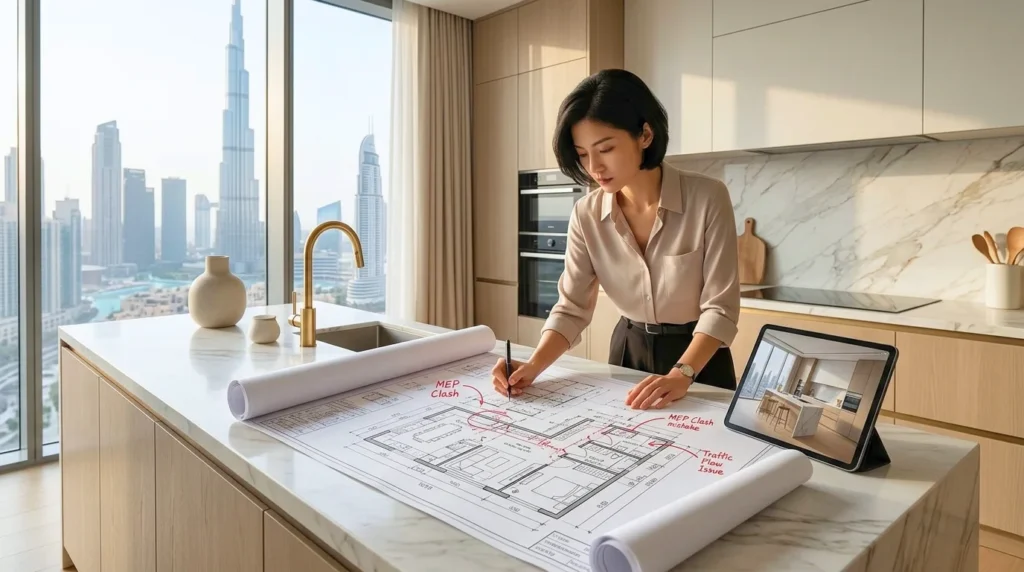
The solution is simple but vital: Your kitchen designer and your MEP contractor must collaborate before any civil work begins. Your structural team should provide a highly detailed MEP schematic drawing showing the exact, coordinate-based placement for every single socket, valve, and drain. Only once this plan is approved should your contractor begin breaking walls.
3. Treating Appliance Selection as an Afterthought
Many homeowners assume they can design the cabinetry first and choose their appliances later. In the world of high-end modular kitchens, this is a dangerous assumption.
Every premium appliance brand—whether it is Miele, Gaggenau, Siemens, or Bosch—has highly specific, proprietary ventilation and installation requirements.
-
An integrated column refrigerator might require a specific air intake channel built into the baseboard and a ventilation chimney at the top of the cabinet wall to prevent the compressor from overheating in Dubai’s summer temperatures.
-
An induction cooktop with an integrated downdraft extractor needs a carefully planned ducting pathway routed through the base of your kitchen island and out through the floor or external wall.
If these exact specifications are not engineered into the cabinet manufacturing process from day one, your appliances will either not fit, or they will operate inefficiently, significantly shortening their lifespans. Choose your exact appliance models during the early design phase. Your kitchen team can then integrate the manufacturer’s technical data sheets directly into the factory production plans, ensuring a seamless, flush fit.
4. Underestimating Storage Needs and Specialized Access
It is easy to make a kitchen look clean and minimalist in a 3D digital render. In reality, a busy household accumulates a massive variety of items: small appliances, heavy pots, delicate glassware, pantry items, spices, and recycling bins.
A common mistake is installing simple, deep cabinet bases with standard shelves. While this is the cheapest configuration, it is also the most inefficient. Items placed at the back of a deep shelf are incredibly difficult to reach, forcing you to bend down and search in the dark every time you need a specific pan.
When planning a luxury space, invest in intelligent internal hardware systems:
-
Deep Pull-Out Drawers: Instead of base cabinets with doors and shelves, utilize wide, heavy-duty pull-out drawers. When opened, the entire contents of the cabinet glide out into full view, allowing you to access items at the very back effortlessly.
-
Corner Solutions: Don’t let corner spaces go to waste. Utilize high-end mechanical swing-out shelving (such as LeMans corner systems) that gracefully glides out of the cabinet when opened, making every square centimeter usable.
-
Dedicated Tall Pantries: Incorporate pull-out larder units with individual wire baskets that let you view and organize your dry goods like a library.
5. Prioritizing Cheap Material Substitutes to Save on Short-Term Costs
A kitchen remodeling project is a significant financial investment, and it is natural to look for ways to optimize costs. However, cutting corners on the structural core of your cabinetry to save a small percentage of your overall budget is a short-sighted decision.
Because the space is exposed to water, heat, heavy steam, and constant physical activity, low-grade materials will fail incredibly quickly. Opting for cheap, non-moisture-resistant cabinet boards to save money upfront will cost you significantly more when those panels warp, swell, and require a full replacement in just a few years. Choosing low-grade, generic drawer runners that sag under the weight of your heavy plates will ruin the premium feel of your home.
True luxury is found in longevity. By investing in moisture-resistant cores, advanced polyurethane (PUR) edge sealing, and world-class German hardware, you ensure that your investment remains beautiful, quiet, and structurally sound for decades. This not only saves you the headache of future repairs but also significantly increases the overall resale value of your property.
Essential Steps for a Successful Kitchen Renovation in Dubai
A flawless kitchen layout is the result of meticulous planning, clear communication, and precise technical engineering. By avoiding these common mistakes and partnering with a dedicated, experienced team, you can turn the remodeling process into an exciting and stress-free experience.
If you are preparing to remodel your home and want to ensure every detail is planned with millimeter precision:
-
Use our interactive kitchen cost calculator to easily estimate the budget required for your ideal layout.
-
Book a private, professional consultation at our Sheikh Zayed Road design office, where our expert kitchen designers in Dubai can review your floor plans, coordinate your MEP requirements, and help you design a space engineered perfectly for your lifestyle.