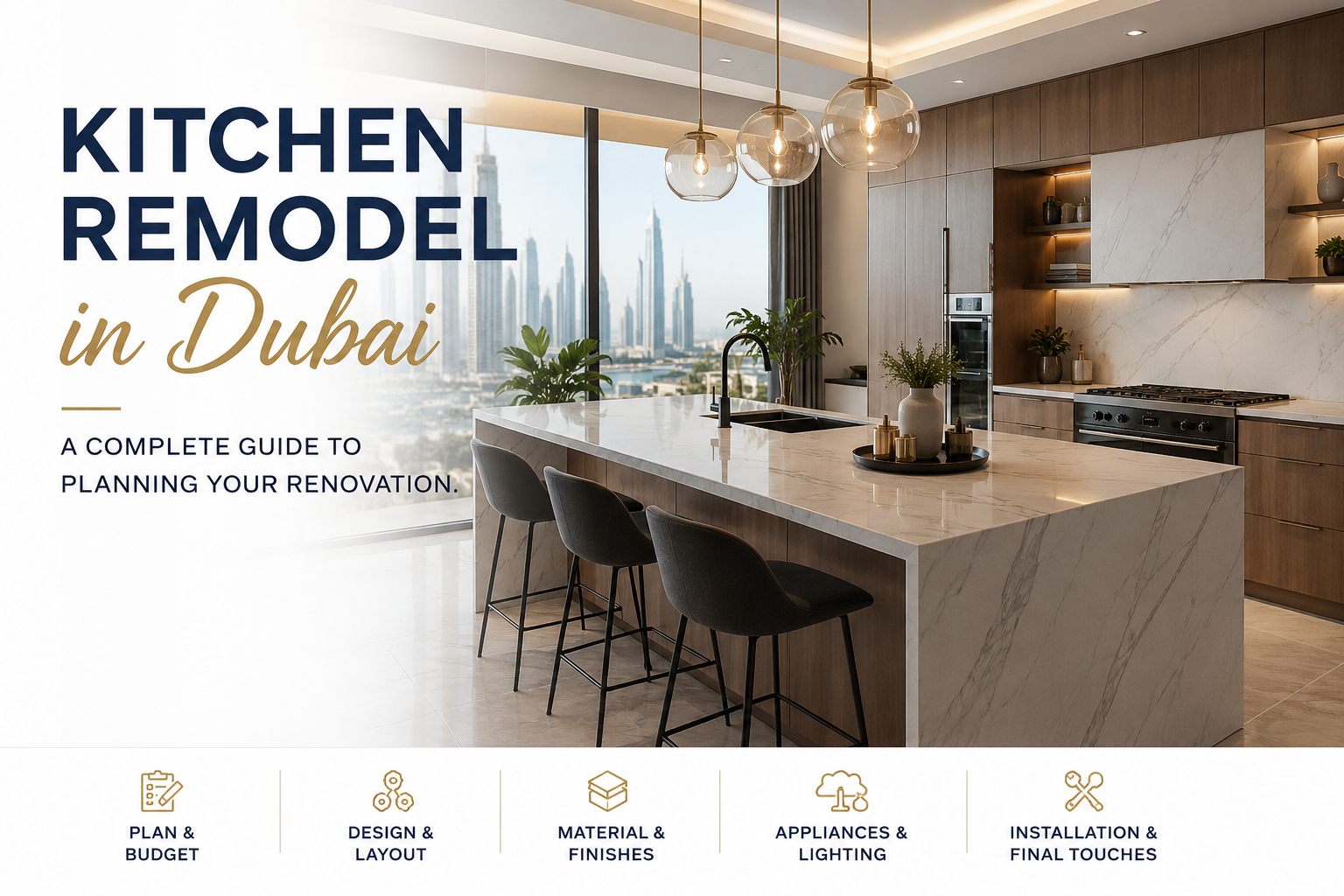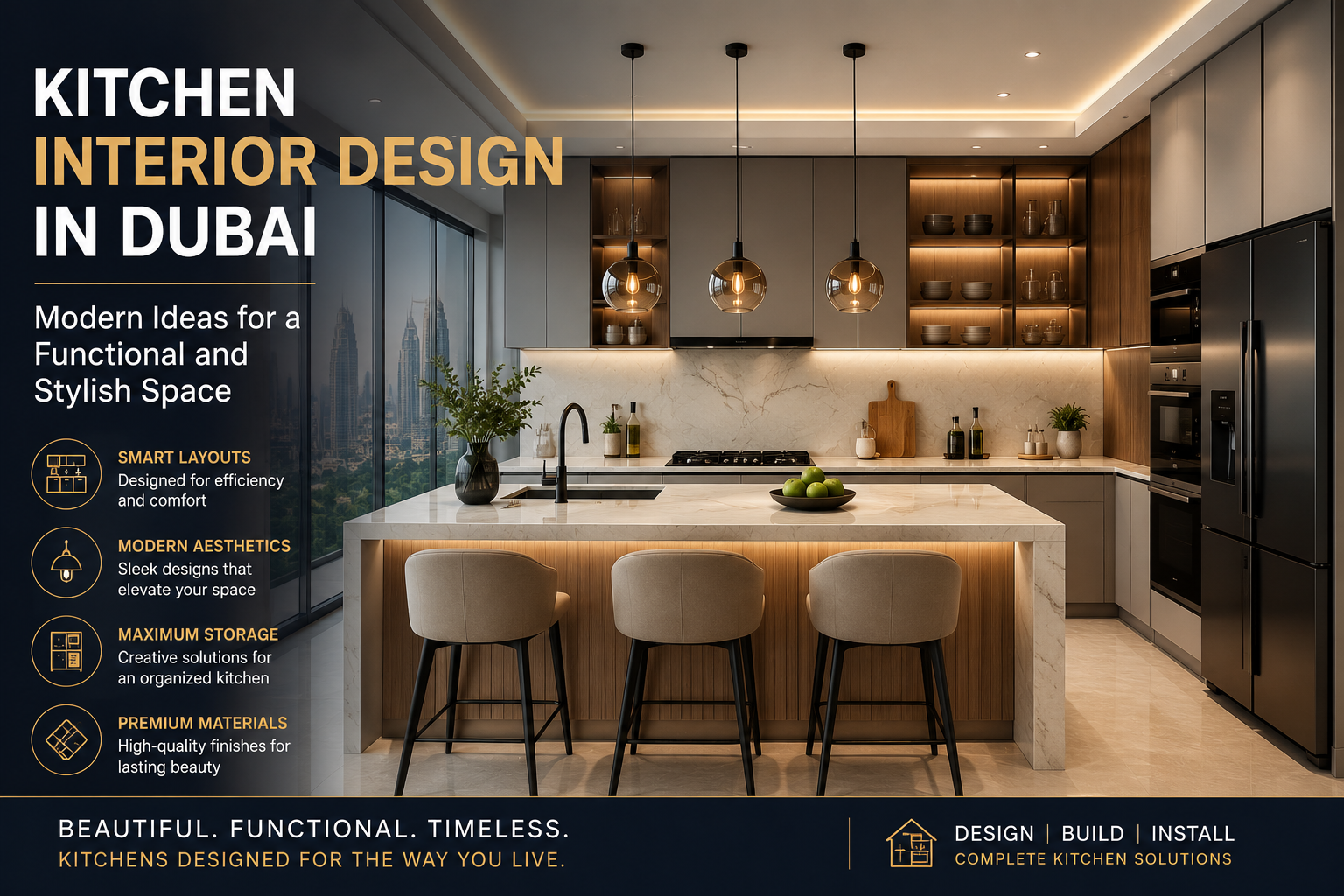



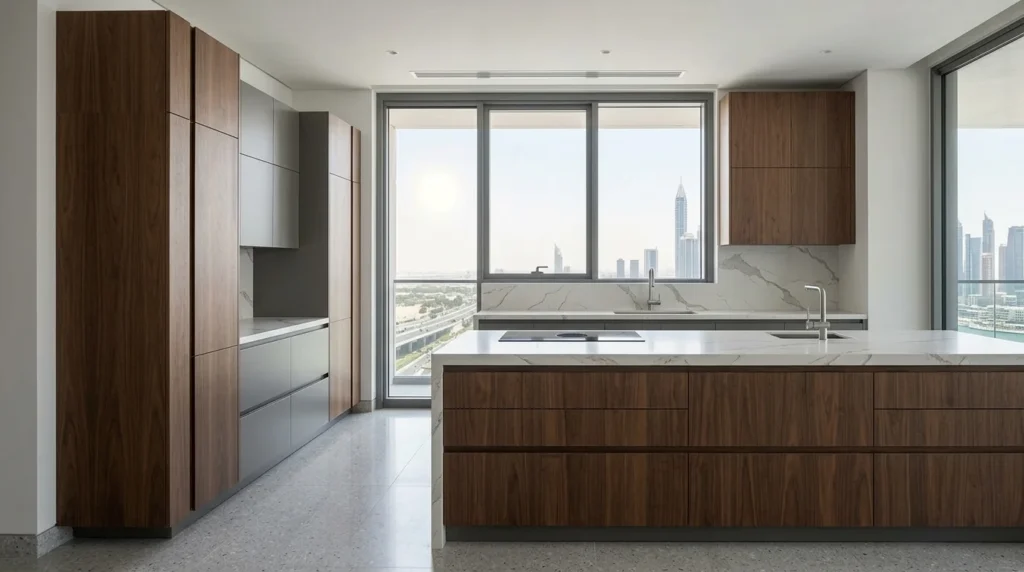
When investing in a high-end renovation, understanding how a luxury kitchen dubai climate interaction impacts materials and structural design is the single most important factor for long-term durability. Homeowners spend weeks selecting the perfect shade of handleless walnut cabinetry, debating the veining of Calacatta marble, and choosing built-in appliances that seamlessly flush with the woodwork.
But there is an invisible, silent factor that has a far greater impact on the lifespan of your kitchen than its color palette: the local climate.
Dubai presents a unique and highly aggressive environment for architectural woodwork. We live in a region of extremes. Outdoors, we face intense summer heat and high coastal humidity. Indoors, we rely on heavy, constant air conditioning to maintain a comfortable living temperature.
This dramatic, ongoing struggle between the hot, humid air outside and the cold, dry air inside creates a harsh environment for joinery. If a kitchen is not engineered specifically to withstand these thermal and moisture fluctuations, even the most expensive-looking space will begin to show its age within just a few years.
Here is the science of why standard kitchens fail in the Gulf, and how to engineer a luxury kitchen that remains structurally flawless for decades.
The Invisible Threat: Wood, Moisture, and the AC Cycle
To understand why kitchens warp, we have to look at the cellular structure of wood. Natural wood and standard wood-composite boards are hygroscopic—meaning they act like a sponge, constantly absorbing and releasing moisture from the surrounding air to reach equilibrium with their environment.
In a typical Dubai home, two major climate events happen daily:
- The AC Microclimate: The air conditioning runs continuously, stripping moisture from the air and cooling the interior surfaces of your cabinets.
- The Thermal Bridge: When balcony doors are opened, or when humidity seeps through villa walls, warm, moisture-laden air collides with these chilled cabinet surfaces.
This causes microscopic condensation to form on and inside the cabinetry. Over time, this constant cycle of expanding (when absorbing moisture) and contracting (when dried by the AC) puts immense structural stress on the cabinetry cores.
In low-to-mid-grade kitchens, this stress leads to highly visible failures. Cabinet doors begin to sag because the hinge screws lose their grip in the swollen wood core. Drawer runners become sticky and uneven. Worst of all, the edge banding—the thin protective strip on the sides of the cabinet panels—begins to peel away, exposing the raw, vulnerable core underneath to even more moisture.
1. The Core Matters: High-Density and Marine-Grade Materials
The foundation of any climate-resistant kitchen lies in what is hidden beneath the luxury veneer or lacquer finish.
Many imported modular kitchens, even those with premium price tags, use standard medium-density fibreboard (MDF) or low-density chipboard cores. While these materials perform perfectly well in the mild, dry climates of Central Europe, they are highly vulnerable to the moisture levels found in the coastal regions of the UAE.
To build a kitchen that survives this climate, the engineering must start at the core:
- High-Density MR (Moisture-Resistant) MDF: This material is manufactured using specialized resins that prevent the wood fibers from expanding when exposed to humidity. It provides a incredibly stable, flat surface for premium lacquer and veneer finishes.
- Marine-Grade Plywood: For areas of the kitchen that are highly exposed to moisture—such as the cabinet housing the sink, the under-sink pull-outs, and the dishwasher surround—standard wood boards should never be used. Marine-grade plywood, constructed with waterproof adhesives, is essential to ensure the structure never rots, warps, or loses its structural integrity.
By selecting the right core material for each specific zone of the kitchen layout, you ensure that the internal framework remains perfectly rigid, allowing heavy-duty drawers and hinges to operate with millimeter precision for a lifetime.
2. The Science of the Seal: PUR Adhesive vs. Standard Glue
Even if you use a high-quality moisture-resistant core, the cabinet is only as protected as its edges. Every panel must be cut and sealed to prevent humidity from penetrating the core.
This is where the manufacturing technology makes all the difference. Most standard furniture factories use EVA (Ethylene Vinyl Acetate) hot-melt glues to apply edge banding to cabinet panels. EVA glue is popular because it is cheap and easy to run through standard machinery. However, EVA glue has a major flaw: it has a low melting point and poor resistance to moisture. Over time, the heat and humidity of a kitchen environment cause the glue to soften, crack, and fail, leading to peeling edges.
To combat this, a premium kitchen manufacturer in Dubai utilizes PUR (Polyurethane) adhesive technology.
Unlike standard glues that simply dry to create a bond, PUR adhesive undergoes a chemical reaction with the moisture in the air to form an incredibly strong, irreversible polyurethane bond. Once cured, PUR glue:
- Is completely waterproof and highly resistant to solvents and heat.
- Creates an invisible, razor-thin joint line that prevents water vapor from ever reaching the wood core.
- Ensures that your cabinet edges will never peel, bubble, or crack, even when positioned directly above a steaming dishwasher or boiling cooktop.
3. Back-Ventilation: Preventing Trapped Humidity
In luxury villa construction across Dubai, kitchens are often designed to flush seamlessly against the walls to achieve a clean, minimalist aesthetic. However, placing heavy wooden cabinetry directly against cold concrete or blockwork walls creates a major risk zone for trapped condensation.
Without proper air circulation, the space behind your cabinets can become a breeding ground for mold and mildew, which not only damages the cabinetry but also compromises the air quality of your home.
An intelligently engineered kitchen incorporates back-ventilation channels.
Instead of mounting the cabinet back panels flush against the rear wall, a small, intentional air gap is engineered into the installation framework. This gap allows air to circulate freely behind the cabinets, preventing moisture build-up and ensuring that any ambient humidity is naturally carried away by your home’s ventilation system.
4. Flawless Finishes: The Protective Armor
The final line of defense against the environment is the exterior finish. While natural wood veneers offer unmatched warmth and luxury, they must be treated with high-performance protective coatings to survive the daily wear, tear, and humidity of a busy household.
For lacquer finishes, utilizing multi-layered polyurethane or acrylic coatings provides a completely non-porous, UV-stable shield that won’t fade or discolor under the bright desert sun streaming through your kitchen windows.
If natural wood is used, it must be sealed with professional-grade, deep-penetrating oils or matte lacquers that preserve the natural texture of the grain while sealing the microscopic pores of the wood against moisture intrusion.
For maximum structural durability, pairing this advanced airflow engineering with zero-porosity, climate-tested countertop materials like Cosentino Dekton ensures your surfaces handle ambient kitchen moisture perfectly.
Investing in Local Engineering
When you design a kitchen for your home in the UAE, you are investing in a space where your family will gather daily for decades. Protecting that investment means designing not just for visual beauty, but for environmental reality.
Choosing a kitchen that has been engineered and manufactured locally means choosing a product built by craftsmen who intimately understand the demands of the local climate. It means utilizing materials, adhesives, and structural designs that are specifically calibrated to handle the delicate balance of Dubai’s interior and exterior environments.
Before you begin your renovation journey, make sure your design team is planning for the invisible factors.
To explore how we engineer cabinetry for maximum longevity, or to get an instant estimate on a custom layout for your home, try our interactive kitchen cost calculator. Alternatively, you can book a private consultation at our Sheikh Zayed Road design office to discuss your project directly with our engineering team.